Weight care options
Lipo Flow Supplement vs Prescription Weight Medicine
Prescription weight medicines are approved to treat obesity; supplements are not. NIH says adults with a BMI of 30 or more, or 27 or more with a weight-related condition, may qualify, and these drugs add 3%-12% weight loss over a lifestyle program at one year (NIDDK: prescription weight-loss medicines). Lipo Flow is a supplement, so talk with a doctor about which fits you.
Written by the Lipo-flow editorial teamUpdated · 9 min read
What is the difference between a weight medicine and a supplement?
A prescription weight medicine is a drug approved to treat overweight and obesity. A dietary supplement is a product sold without FDA review of whether it works. FDA does not have the authority to approve supplements before they are sold (FDA: supplements are not pre-approved).
That legal gap shapes everything else. A medicine reaches you after trials, a label with tested doses and a prescriber who checks your health. A supplement reaches you through a store or website, and you are left to judge it yourself.
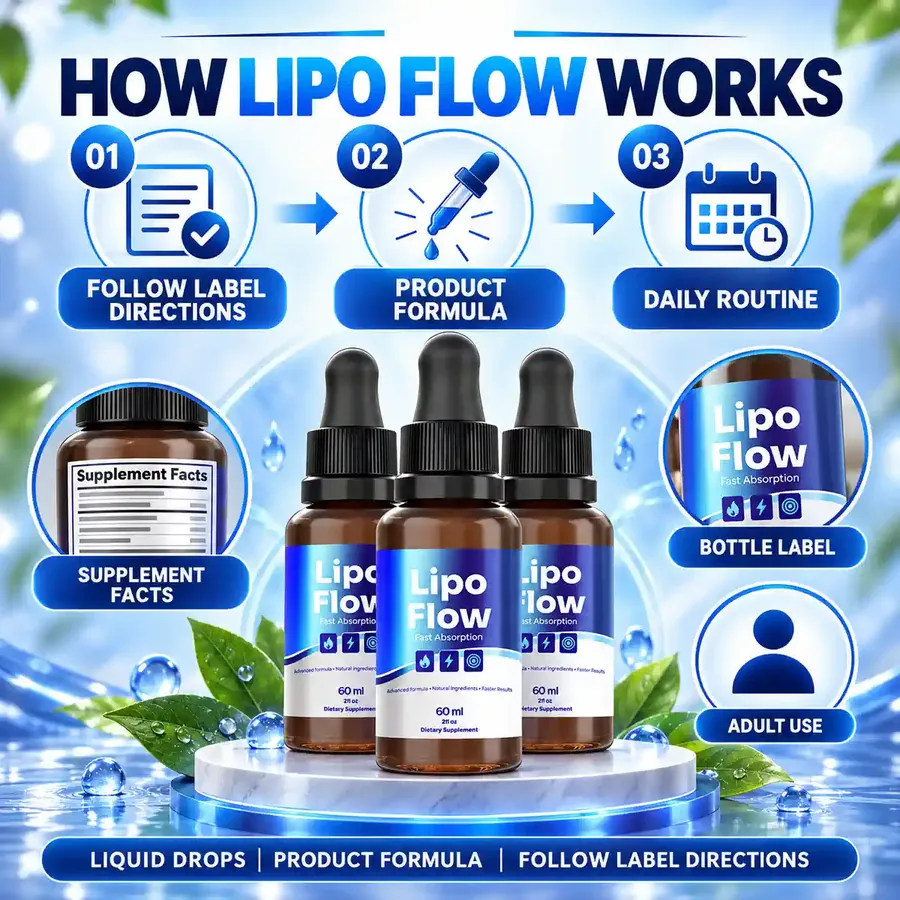
Lipo Flow is a dietary supplement. It is not a drug and not a weight-loss medicine. Its label lists 0.7 mcg of chromium and a 200 mg blend of 22 ingredients per dropper, and it makes no claim to treat any condition.
Who qualifies for prescription weight-loss medicine?
NIH says adults may qualify with a body mass index (BMI) of 30 or higher. Adults with a BMI of 27 or higher can also qualify if they have a weight-related health condition (NIDDK: prescription weight-loss medicines).
Qualifies on BMI alone
A doctor may discuss medicine with any adult at this level, alongside eating and activity changes (NIDDK: prescription weight-loss medicines).
Qualifies with a related condition
A weight-related health problem lowers the threshold. Your doctor decides which conditions count for you (NIDDK: prescription weight-loss medicines).
Qualifying is the start of a conversation, not a guarantee of a prescription. A doctor weighs your history, other medicines and goals. Cost and insurance coverage also vary, so ask about them early.
Which weight-loss medicines are approved?
NIH names several approved options, including orlistat, Qsymia, Contrave, Saxenda, Wegovy and Zepbound (NIDDK: prescription weight-loss medicines). Not every one suits every person.
| Question | Approved weight medicines | Supplement (Lipo Flow) |
|---|---|---|
| Approved to treat overweight and obesity | Yes | No |
| Who it is for | Adults at BMI 30+, or 27+ with a related condition | Adults; label says to ask a physician with a medical condition |
| Typical added loss at 1 year | 3%-12% over a lifestyle program | Not published; no trial of the product |
| Needs a prescriber | Yes | No |
| Examples or format | Orlistat, Qsymia, Contrave, Saxenda, Wegovy, Zepbound | Liquid drops, 1 or 2 droppers a day |
Side effects, doses and costs differ by medicine. Those details belong in a talk with your doctor, who can match them to your health.
How much weight do prescription medicines add?
At one year, approved medicines add about 3% to 12% weight loss on top of what a lifestyle program achieves (NIDDK: prescription weight-loss medicines). The range is wide because the drugs differ and people respond differently.
The key phrase is "on top of." These medicines are studied alongside eating and activity changes, not instead of them. A person who takes medicine and keeps their habits the same is not the person in the trials.
For someone who weighs 220 pounds, 3% is about 7 pounds and 12% is about 26 pounds, beyond what the lifestyle program alone would bring. That is arithmetic, not a prediction for any one person.
Why does losing 5% to 7% of your weight matter?
Modest loss can bring real health gains. NIH says losing at least 5% to 7% of starting weight may prevent or delay type 2 diabetes, and losing 3% to 5% may reduce liver fat (NIDDK: health risks of overweight).
| Starting weight | 3% | 5% | 7% |
|---|---|---|---|
| 180 lb | 5.4 lb | 9 lb | 12.6 lb |
| 200 lb | 6 lb | 10 lb | 14 lb |
| 250 lb | 7.5 lb | 12.5 lb | 17.5 lb |
CDC adds that a 5% loss, such as 10 pounds for a 200-pound person, can improve blood pressure, cholesterol and blood sugar (CDC: losing weight). Goals in that range are reachable and worth celebrating.
Try Lipo Flow for 60 days1-2 droppers a day · from $49 a bottle · free U.S. shipping on 3+ bottles
Order nowHow fast should you lose weight?
About 1 to 2 pounds a week. CDC says people who lose weight at that pace are more likely to keep it off (CDC: losing weight).
- Weeks 1-4
Set up meals, movement and sleep you can repeat. Weigh in once a week.
- Weeks 5-12
At 1-2 pounds a week, a 200-pound person reaches the 5% mark of 10 pounds within about 5 to 10 weeks.
- Month 4 onward
Review progress with your doctor and decide together whether medicine has a place.
Our healthy weight guide lays out the daily habits behind this pace.
What can a supplement like Lipo Flow do, and what can it not do?
A supplement cannot do what an approved medicine does. NCCIH says that of the supplements studied, none has been shown to be effective for weight loss (NCCIH: weight control). NIH also says lifestyle change is the basis for long-term loss (NIH ODS: lifestyle is the basis).
What Lipo Flow does offer is modest and practical. It is quick drops with no pills, the full ingredient list is printed, and a 60-day guarantee lowers the cost of trying it. Some people like a small daily ritual that keeps their goals in mind.
Its research doses tell the rest of the story. Chromium trials used 137-1,000 mcg a day (NIH ODS: chromium and weight), against 1.4 mcg in two droppers. See the who Lipo Flow is for page for a fair fit check.
When should you talk to a doctor about weight?
Talk to a doctor if your BMI is 27 or higher with a health condition, 30 or higher, or if you take any daily medicine. Those are the situations where professional care can add the most.
Products high in caffeine or caffeine-containing herbs can raise heart rate and cause abnormal rhythms (NCCIH: weight control). Lipo Flow contains guarana and green tea. Tell your doctor about it, especially if you start a prescription weight medicine.
- Bring your weight history and current medicine list.
- Ask whether you qualify for an approved medicine.
- Ask about cost, coverage and follow-up visits.
- Show any supplement label you use or plan to use.
The Lipo Flow medicines guide lists the ingredients to mention at that visit.
Should you choose a medicine or a supplement?
If you qualify and need real medical help with weight, an approved medicine with a doctor's care is the tested path. A supplement is not a substitute for it.
If you want Lipo Flow as a simple add-on to healthy habits, that is your call to make, ideally with your doctor's input. Keep your expectations grounded, track your progress weekly and judge it by how you feel, not by the words on the bottle.
FAQ
Weight medicines, supplements and Lipo Flow FAQ
What BMI do you need for weight-loss medication?
NIH says adults may qualify at a BMI of 30 or higher, or at 27 or higher with a weight-related health condition (NIDDK: prescription weight-loss medicines). A doctor makes the final call based on your health and other medicines.
How much weight do you lose on prescription weight-loss drugs?
NIH reports that approved medicines add about 3% to 12% weight loss over a lifestyle program at one year (NIDDK: prescription weight-loss medicines). Results differ by drug and by person, and they assume eating and activity changes continue.
Are weight-loss supplements as effective as prescription drugs?
No. NCCIH says none of the studied weight-loss supplements has been shown to be effective (NCCIH: weight control), while approved medicines are cleared to treat overweight and obesity. Supplements also skip FDA review before they reach shelves (FDA: supplements are not pre-approved).
Is Lipo Flow a weight-loss medicine?
No. Lipo Flow is a dietary supplement in liquid-drop form. It is not a drug, makes no weight-loss or disease claim on its order page, and is not a replacement for prescribed care.
What are the health benefits of losing 5% of body weight?
CDC says a 5% loss can improve blood pressure, cholesterol and blood sugar (CDC: losing weight). NIH adds that losing 5% to 7% may prevent or delay type 2 diabetes (NIDDK: health risks of overweight).
Can I take Lipo Flow with a prescription weight medicine?
Ask your doctor first. Lipo Flow's blend includes caffeine sources such as guarana and green tea, plus several herbs. The label also tells anyone with a known medical condition to consult a physician.
Is LipoFlow a prescription weight loss drop?
No. LipoFlow is a dietary supplement sold as drops, not a prescription medicine. It does not need a prescription, but anyone considering weight care should talk to a doctor first.
Can Lipo Flow replace a doctor plan for weight?
No. A supplement such as Lipo Flow is not a substitute for medical advice or a doctor-led weight plan. Check with your doctor before adding drops, especially if you take any prescribed medicine.
Is Lipo Flow a supplement or a drug?
Lipo Flow is a dietary supplement sold as liquid drops. It is not a prescription weight medicine.
Who wrote this
Written and reviewed by
A small team that reads the bottle label line by line, checks every number against public health sources (NIH ODS, NCCIH, CDC, NIDDK, FDA, FTC) and rewrites it in plain English. We do not write for the manufacturer, and we update a page whenever the label, the prices or the evidence changes.
Last updated . Read our editorial standards and how we check reviews. This website is run by a USA authorized retailer, not by the manufacturer. We earn money when you buy through our order links.
Keep reading
More about Lipo Flow
Healthy weight guide
The CDC pace, the 5% health target, the 5-7% diabetes figure and when prescription care makes sense, in plain words.
Read moreMedicines and Lipo Flow
A medicine-by-medicine table of sourced Lipo Flow interactions and the exact questions to ask your pharmacist.
Read more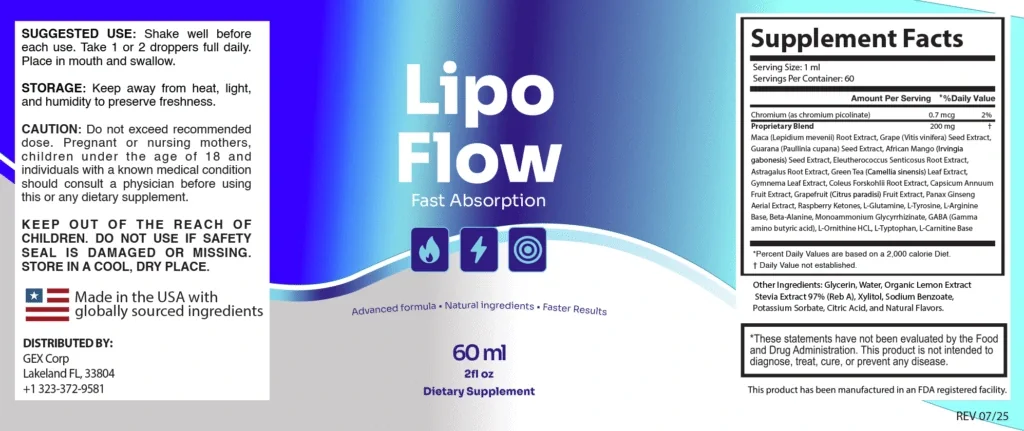
Who it's for
A five-question checklist and a plain table of who should ask a doctor before trying Lipo Flow drops.
Read moreUSA authorized Lipo Flow retailer
Ready to try Lipo Flow?
Pick a pack. At two droppers a day every pack lasts at least 60 days, the whole money-back window.
- Secure checkout
- 60-day money-back guarantee
- Ships from the U.S.